High Rise Signs
What is High Rise Signage?
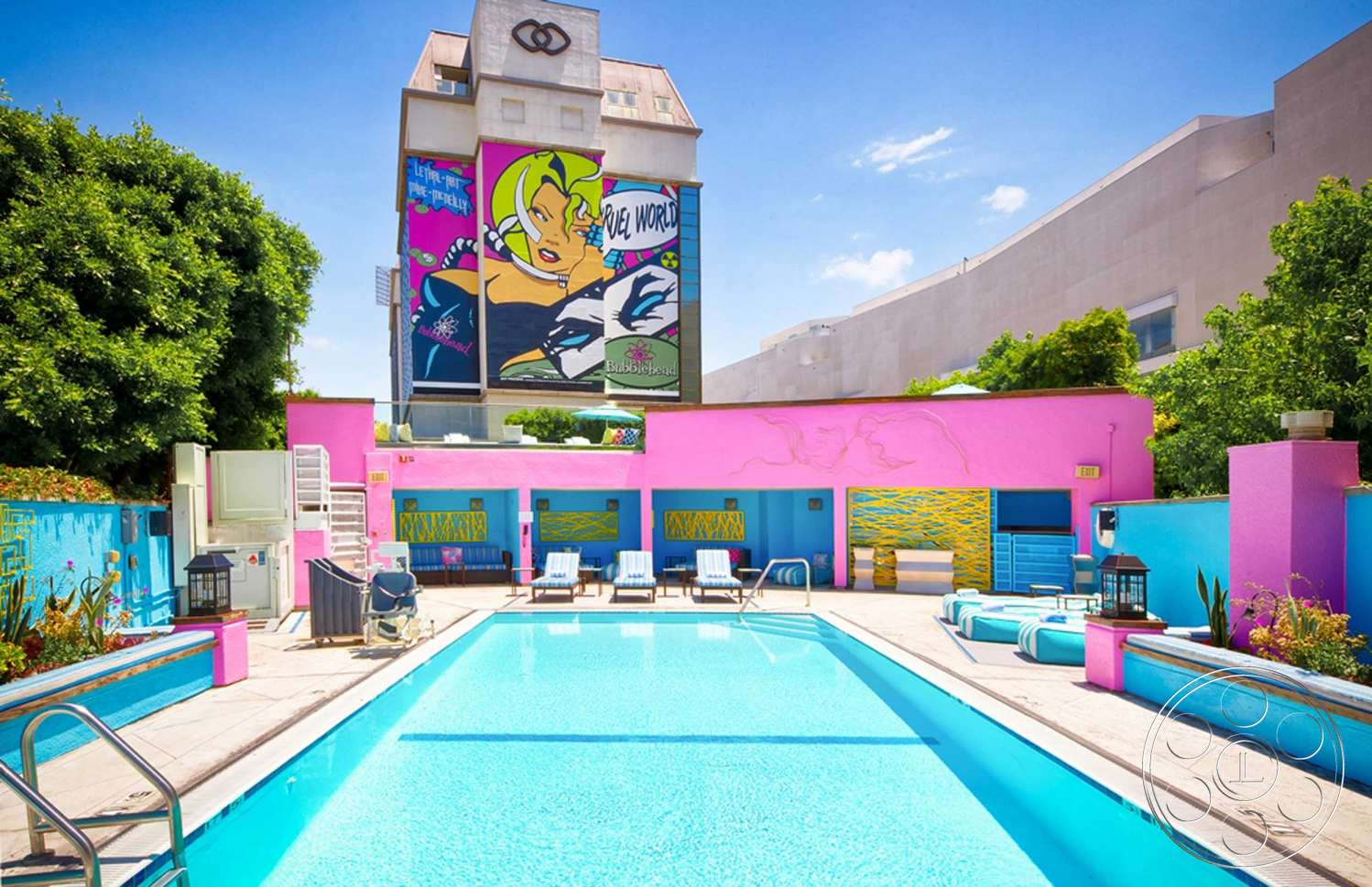
In Los Angeles American Signs is your High Rise sign company. High rise signage refers to large-format signs installed on tall commercial buildings — typically any structure four stories or higher. These signs are designed to be visible from a significant distance, whether from the street below, neighboring buildings, or major roadways nearby.
Unlike standard ground-level or storefront signs, high rise signage is engineered specifically for the structural, environmental, and regulatory demands of elevated installation. That means accounting for increased wind loads at altitude, anchoring into steel or concrete building structures, complying with stricter local sign codes, and using certified crews trained for high-altitude work.
Common forms of high rise signage include:
- Rooftop signs (mounted at the crown of a building)
- Upper-floor façade lettering and channel letters
- Dimensional logos affixed to the building exterior
- Illuminated and LED sign systems
- Full-building identity and multi-tenant sign programs
Who uses high rise signage? Corporate headquarters, hotel towers, hospital systems, mixed-use developments, office towers, and any business that occupies or owns a multi-story building and wants their brand visible at a citywide scale.
The defining characteristic that separates high rise signage from conventional commercial signs is the engineering and expertise required — structural calculations, stamped permit drawings, wind-load analysis, and installation by crews qualified to work safely at significant heights.
In short, if a sign needs to be seen from a distance and installed above the fourth floor, it falls into the category of high rise signage.
What are the key characteristics of High-Rise Signs?
Here are the key characteristics that define high rise signs and set them apart from standard commercial signage:
Scale and Visibility High rise signs are built large — intentionally. Letter heights commonly range from 18 inches to 10+ feet to remain legible from street level or at a distance. The entire sign system is designed around a viewing distance that can span several city blocks or even miles for rooftop installations.
Structural Engineering Every high rise sign requires a stamped structural engineering report. Wind forces increase dramatically with height, so mounting systems, hardware, and sign frames must be calculated to withstand local design wind speeds — typically 90 to 150 mph depending on geography and elevation.
Illumination The vast majority of high rise signs are illuminated. LED channel letters, halo-lit logos, and backlit cabinets ensure the sign performs equally well at night and in low-visibility conditions. Illumination systems are designed for long-term reliability with minimal maintenance at altitude.
Durable Materials High rise signs are fabricated from commercial-grade materials built to survive years of exposure at elevation — primarily aluminum, structural steel, stainless steel, and UV-stable acrylics. Coatings and finishes are selected specifically for weather resistance.
Permitting and Code Compliance High rise signs trigger more complex permitting requirements than ground-level signs — often requiring wind analysis reports, building owner authorization, structural drawings, and in some jurisdictions, design review or landmark approval.
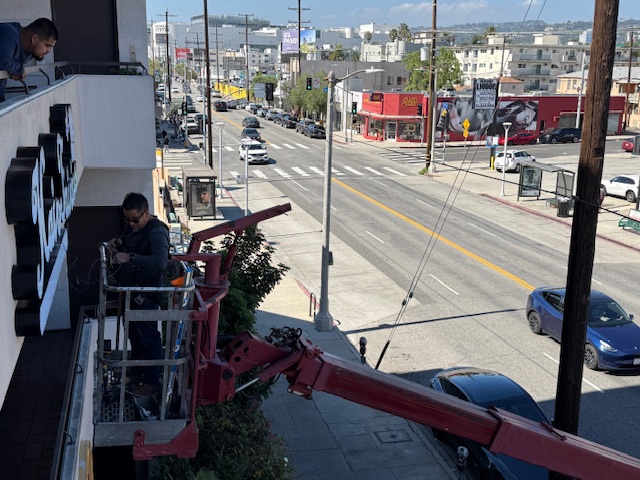
Specialized Installation Installation requires OSHA-certified crews trained in aerial work platform operation or industrial rope access (IRATA). Standard sign installation equipment and methods do not apply above a certain elevation.
FAA Compliance (when applicable) Any sign structure on a building exceeding 200 feet above ground may require FAA notification and aviation obstruction lighting to remain compliant with federal air traffic regulations.
Longevity Because access for repairs is costly and logistically complex at altitude, high rise signs are engineered and fabricated to last. Quality components, robust mounting systems, and weatherproof electrical systems are non-negotiable at this scale.
American Signs is your local High Rise sign company in navigating all of the process from design, to permits, fabrication and installation. Let us help your brand own the skyline!
High Rise Signage Company in Los Angeles
What are the benefits? With High-Rise Signage in Los Angeles you own the skyscape!
