
The process can feel surprisingly murky at first. Sign businesses ask about materials, mounting styles, illumination options, and square footage before you’ve even had a chance to describe what you’re picturing. Pricing can vary wildly from one vendor to the next, and it’s not necessarily obvious why. If you’ve ever walked away from a first conversation feeling more confused than when you started, you’re not alone - and it’s not your fault. The sign industry has its own language, and you haven’t had a reason to learn it yet.
What’s worth remembering is that this investment legitimately matters. According to a FedEx study, 76% of consumers said they had entered a store or business they had never visited before based purely on its sign. That’s not a small thing. Your sign is usually the first impression your business makes, and it’s working for you - or against you - every day without saying a word.
The good news is that a custom sign quote doesn’t have to be a stressful experience. Once you know what actually happens during the process, what things drive the price up or down, and which questions are worth asking before you commit, it can become a much easier conversation - and that’s what this post covers.
Key Takeaways
- Gather location details, rough size, vector logo files, and check lease or HOA restrictions before requesting a quote.
- Sign prices are driven by size, materials, lighting, design complexity, and quantity - most businesses spend $2,000-$3,500.
- Permits ($300-$2,500) and installation (averaging $464) are often excluded from initial quotes, so always request full itemized pricing.
- Most custom sign projects take two to six weeks; permit approval alone can take two to three weeks and cannot be skipped.
- Before signing off, ask about warranty coverage, revision fees, permit handling, and post-installation maintenance options.
What Information You’ll Need to Pull Together Before Requesting a Quote
Before you reach out to a sign company, it helps to collect a few facts in advance. The more you can tell them upfront, the faster they can give you an accurate number - and the less back-and-forth you’ll have to deal with.
Start with your location and where you’re looking to put the sign. A sign company will want to know if you’re thinking about a wall-mounted sign, a window graphic, or a freestanding structure near the road, and each placement type means different materials and installation needs, so this isn’t a small thing to skip over.
Have a rough size in mind if you can. You don’t need exact measurements, but knowing the general scale - like if you want something small above a door or a large exterior sign visible from the street - gives the sign company something to work with. A site visit or photos of the space can also help them assess what’s possible.

Your logo files matter more than you might expect. Vector files (like .ai or .eps formats) are what sign makers use to scale artwork without losing quality. If you only have a low-resolution image from your website, mention that when you reach out so the company knows what they’re working with from the start.
One thing worth checking before you contact anyone is whether you have landlord approval requirements or HOA rules to follow. Some commercial leases restrict sign size, placement, or lighting. Local municipalities also have permit requirements that can affect what’s allowed - it’s worth a quick look at your lease or a call to your landlord before you fall in love with a design that won’t be approved.
Having this ready doesn’t have to take long. Even rough answers to these questions will put you in a much better position to get a quote that actually matches what you need.
The Main Factors That Drive Your Sign’s Price Up or Down
Size is usually the first thing to affect your quote. A small window decal and a large exterior wall sign are made from different amounts of material and labor, so the price difference between them can be giant.
The material your sign is made from matters just as much as its size. Aluminum, acrylic, foam board and wood all sit at different price points. More heavy duty materials cost more to source and to work with, which shows up directly in the quote.
Lighting is one of the bigger cost variables. A non-illuminated sign is usually less expensive than one with LED channel letters or an illuminated cabinet. Lit signs perform better at night and in low-light conditions, so the added cost usually has a job behind it.
Design difficulty is another line item worth mentioning. Intricate shapes, multiple colors, or custom fabrication take more time to produce. If you don’t already have print-ready artwork, graphic design fees can add $50 to $150 per hour to your total.
Ordering more than one sign brings your per-unit cost down. Quantity discounts are quite common, so if you need signs for multiple locations, it’s worth asking about pricing on a bigger order at the same time.
Two signs that look almost identical can carry very different price tags based on how they’re built. The table below gives a rough sense of where different sign types like to land.
| Sign Type | Approximate Price Range |
|---|---|
| Vinyl banners and decals | $50 - $500 |
| Foam or PVC flat signs | $200 - $1,500 |
| Monument signs | $2,000 - $10,000+ |
| LED channel letter signs | $3,000 - $15,000+ |
| Large illuminated cabinets or pylons | $10,000 - $200,000 |
Most businesses spend in the $2,000 to $3,500 range for a standard exterior sign. Where you land can depend on the combination of the things above working together.
Permits, Installation, and the Costs People Usually Forget to Ask About
Even after you’ve worked through the main pricing things, there are still a few line items that don’t always show up in a first quote. Permits and installation are the big ones.
Most municipalities need you to pull a permit before putting up a new sign. Permit fees usually fall between $300 and $2,500 depending on your city, the sign type, and its size. Some sign businesses manage the permit process for you and fold the cost into your quote. Others leave that entirely to you, so it’s worth asking directly which way they manage it.
Installation is another cost to pin down early. The national average for sign installation sits around $464. But the range is wide - anywhere from $75 for a small, easy job to $1,540 or more for something that requires a lift, electrical work, or a tough mounting setup. A quote that lists only the fabrication cost can look cheaper than it is.
The simplest thing to do is ask your sign company for a full overview that includes fabrication, permits, and installation as separate line items. That way you’re comparing apples to apples if you get quotes from more than one company.
It’s also worth keeping the bigger picture in mind before cutting corners on quality. A University of Cincinnati study found that better signage was linked to a 7.2% increase in sales for businesses. That doesn’t mean you’ll have to overspend. But it does mean that your sign is doing work for your business every day.
Electrical connections, removal of an old sign, and travel fees for installation crews are a few more things that can add to the final number. None of these are unusual charges. But they won’t always appear automatically in a first quote.
How Long the Whole Process Actually Takes From Quote to Installation
Once you approve the quote and sign off on the design, the clock starts - but it moves through a few stages before anyone shows up with a drill. Most custom sign projects run between two and six weeks from start to finish, and that range can depend on fabrication difficulty, how fast permits get processed, and how busy the installer’s schedule is.
Here is a rough overview of what those weeks involve. Design sign-off comes first, followed by fabrication, then permit approval, and finally installation scheduling - and each stage has its own lead time and none of them run in parallel.
Permits are worth paying close attention to here. In some cities, approval from the local planning or zoning office can take two to three weeks on its own. The sign company can’t legally install before that approval comes through, so there’s no way to push past that step.
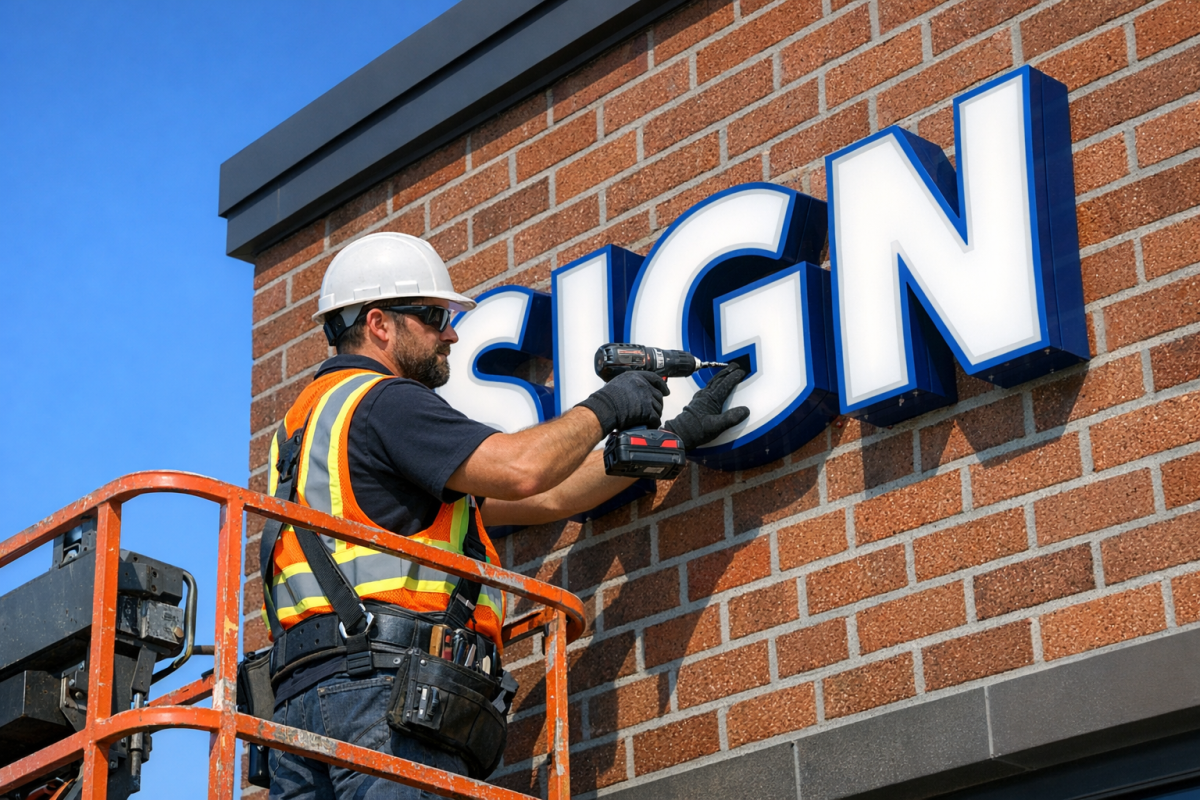
Fabrication time depends quite a bit on what you ordered. A basic flat-cut acrylic sign moves faster than an illuminated cabinet or a channel letter installation - it’s worth asking the sign company about their current production load to lock in any deadline you have in mind.
Installation day itself is usually the quickest part. Most jobs take one to four hours on site, depending on the size and mounting type. The weeks of waiting lead to a pretty short window of physical work.
The best thing you can do early on is ask for a stage-by-stage timeline in writing - one that tells you when fabrication starts, when the permit application goes in, and when installation is expected to land on the calendar. That way you’re not left wondering where your sign is three weeks after you paid the deposit.
Pressure to compress the timeline by skipping steps or forcing a faster turnaround can create problems - especially if a permit hasn’t cleared.
Questions Worth Asking Before You Sign Off on Anything
A sign company will welcome your questions. If something feels vague in the quote, ask about it before anything moves forward.
One of the most important things to ask is what the warranty covers and for how long. Some warranties cover materials but not labor, and some have conditions attached. It’s worth learning about what you are protected against before you commit.
Ask what happens if the sign gets damaged during installation. Accidents are rare, but they do happen. You want to know who is responsible for the cost of repair or replacement if something goes wrong on the day of install.
Permits are another area worth a direct conversation. Ask who handles the permit application and what happens if the permit takes longer than expected. Some businesses manage that for you and some expect you to take care of it yourself.
If you think the design might need changes after the first draft, ask if revisions cost extra. Some businesses include a set number of revisions in the price and charge for anything past that. Knowing this in advance saves you from a tense conversation later.
It is also worth asking about maintenance later. LED signs and illuminated channel letters have parts that can wear out over time. Ask if the company does maintenance or repair work after installation and what that service looks like.
Finally, ask for a rough overview of what is included in the total price. Not a full itemized invoice immediately, but a general sense of what covers materials, what covers labor, and what covers any extras like delivery or mounting hardware for interior spaces or exterior installations.
You are not being difficult by asking these things. You are making sure that you know what you are getting into. The right company will take the time to talk about it.
Your Sign Quote Doesn’t Have to Be a Guessing Game
Take a few minutes to collect your ideas, jot down your must-haves, and think about your timeline. You don’t need to have everything figured out - it’s what the sign company is there for. Whether you’re exploring bespoke signs or something more standard like box signs, you just need to show up ready to have a conversation and the rest will follow.

When you’re ready to take that next step, American Signs is here to help. Reach out for a free, no-pressure estimate and let’s talk about bringing your vision to life. Give us a call at 866-598-7271 or send us an email at info@americansignsinc.com - we’d love to hear from you.