That surprise is completely understandable. From the outside, a sign looks like an easy thing - some letters, maybe a logo, mounted on a wall or a post. But getting from that mental image to a finished, installed sign means more moving parts than most people know. Design work, material sourcing, permitting, fabrication, and installation all have to happen in the right order, and each step has its own lead time that can’t always be rushed.
Once you understand what’s actually involved, the timeline stops feeling frustrating and starts making sense. Depending on the type of sign you need and how complex the project is, the full process from your first conversation with a sign company to the moment it goes up can take anywhere from a few days to a few months. A simple banner could be ready in 48 hours. A custom illuminated monument sign with city permits could take twelve weeks or more. Neither of those timelines is unreasonable once you see what goes into them.
This overview will walk through each stage of the process so you know what to expect, what you can do to keep things moving, and how to plan realistically for your opening or rebrand. The more you understand the process first, the smoother it tends to go.
Key Takeaways
- Business sign timelines range from 48 hours for simple banners to 12+ weeks for custom illuminated monument signs.
- Permits are a major timeline factor, adding two to eight weeks depending on location, sign size, and local zoning laws.
- The design phase typically takes one to three weeks, but clients with brand files ready can cut this significantly.
- Fabrication alone takes two to six weeks, depending on sign complexity, materials, and shop workload.
- Installation labor costs average $50-$150 per hour, making early budget planning essential to avoid surprises.
Why Business Sign Timelines Vary So Much
The honest answer to how long the whole process takes is that it can depend on how different things play into a single project.
The biggest driver is sign type. An easy interior sign for a reception desk moves through production much faster than a large illuminated sign mounted to the outside of a building. Size matters too, because bigger signs need more materials, more fabrication time, and sometimes more hands mixed up in the install.
Location is another factor that shapes the timeline more than expected. Indoor signs skip the steps that outdoor signs go through. Outdoor signs face weather-resistance requirements, structural considerations, and in most cases, a permit process that can add weeks to the schedule on its own.
Permits are worth calling out. Not every sign needs one. But when it does, your timeline is partly in the hands of your local municipality. Some permit offices turn approvals around quickly, and others take a few weeks; it’s not something a sign company can speed up.
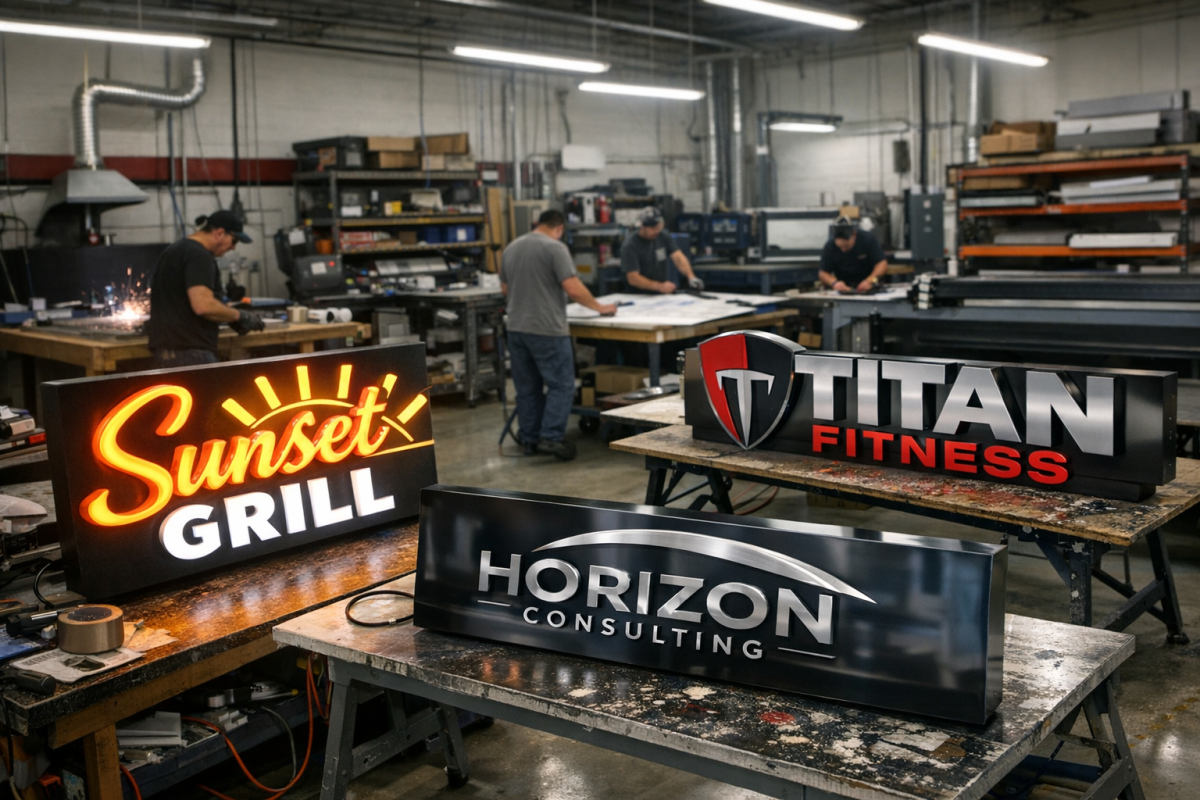
The table below gives a rough sense of how timelines break down by sign type.
| Sign Type | Estimated Timeline | Permit Needed? |
|---|---|---|
| Simple interior sign | 4-10 business days | Usually no |
| Standard outdoor sign | 4-8 weeks | Often yes |
| Large custom lit sign | 6-12 weeks | Yes |
Materials also play a role that’s easy to underestimate. Standard materials are usually in stock and ready to go. But custom finishes, specialty substrates, or imported parts can introduce lead times that push your project back before production even starts.
Once you know what’s involved, the timeline starts to make quite a bit more sense, and each phase from the first design conversation to the final install has its own moving parts, and the sections ahead will talk about each one in detail.
The Design and Consultation Phase
This is where the project actually starts to take shape. A sign company will want to know your brand, your space and what you’re trying to communicate before anyone starts building anything.
The first meeting or consultation is usually about collecting information. You could be asked to share logo files, brand colors and examples of styles you like. Some designers use mood boards to align on a direction early, which saves time later. A site survey may also happen at this stage so the team can take measurements and look at things like wall material, lighting conditions and sight lines.
How prepared you are at the start makes a difference to how long this phase takes. If you have brand guidelines and high-resolution files ready to go, the designer can move faster. If you’re starting from scratch - no logo, no direction - expect to spend more time in the early conversations before design work can even start.
Once a first concept is ready, you’ll review it and give feedback. This is the revision stage and it’s where most of the time goes. One round of small adjustments might take a few days. But if the direction changes, you could be looking at a full redesign. Two or three revision rounds is pretty normal and each one can add days to the timeline.

The full design and consultation phase usually runs between one and three weeks. An easy project with a prepared client can wrap up in a few days. A more complex sign with multiple elements across different sign types, or a client who needs more time to get sign-off from stakeholders, can stretch that window out considerably.
| Situation | Estimated Design Phase Length |
|---|---|
| Client has brand files and clear direction | 3-5 business days |
| Some assets available, minor decisions needed | 1-2 weeks |
| Starting from scratch or multiple stakeholders | 2-3 weeks or more |
Internal approval processes on the client side are easy to underestimate. If a sign concept needs to go through a manager, a franchise head, or a committee before it’s approved, that alone can add days or weeks to the timeline before production can start.
Permits, Approvals, and the Waiting Game
Once your design is locked in and approved, the next step isn’t fabrication - it’s paperwork. Most outdoor signs need a permit from your local city or municipality before anything gets built or installed.
This part of the process tends to be the most frustrating for business owners. The design looks great and now you’re being told to wait on a government office that moves at its own pace.
Permit timelines can run anywhere from two to eight weeks depending on where you’re located. The size of your sign, your local zoning laws, and how backed up the permit office is will all affect how long you wait. Some cities are fast and straightforward, and others have multi-step review processes that add time to your project.
Larger signs usually need permits. Channel letter signs, monument signs, pylon signs, and illuminated signs usually fall into this category. Smaller window graphics or interior signs usually don’t. But it’s worth checking with your sign company to be sure.
A sign installed without the right approvals can be ordered to come down, and the business owner is usually responsible for the removal cost. You may also face fines depending on your municipality.

Your sign company will manage the permit application in most cases, which takes the burden off you. They know what documents to include, how to meet local code specifications, and who to follow up with. That said, the waiting period itself is largely out of everyone’s hands once the application is submitted.
Some locations also have design review boards or historic district requirements that add an additional layer of approval on top of the standard permit. If your business is in a shopping center, your landlord may need to sign off as well.
The permit phase doesn’t mean your project is stalled - it means there’s work happening in the background that isn’t visible yet. Fabrication is usually the next step, and that’s where things start to feel real again.
Fabrication and What Happens Behind the Scenes
Once permits are approved, fabrication can start. Most underestimate this phase because it sounds easy. But building a sign is a manufacturing process - not a matter of hitting print and waiting for a package.
What actually happens during fabrication can depend on the type of sign. A channel letter sign means cutting metal, shaping each individual letter, and wiring internal LED parts before any finishing work starts. A vinyl or printed sign goes through its own process of substrate preparation, high-resolution printing, and lamination, and each sign type has its own sequence of steps and its own timeline.
Material options play a big part in how long fabrication takes. Acrylic and aluminum are common options for dimensional and cabinet signs because they hold up well outdoors. But they take time to cut, route, and finish cleanly. LED parts add some more work because the wiring has to be correct before the sign is sealed up. Cutting any of these steps short creates problems that show up later - uneven edges, poor light distribution, or finishes that don’t hold.
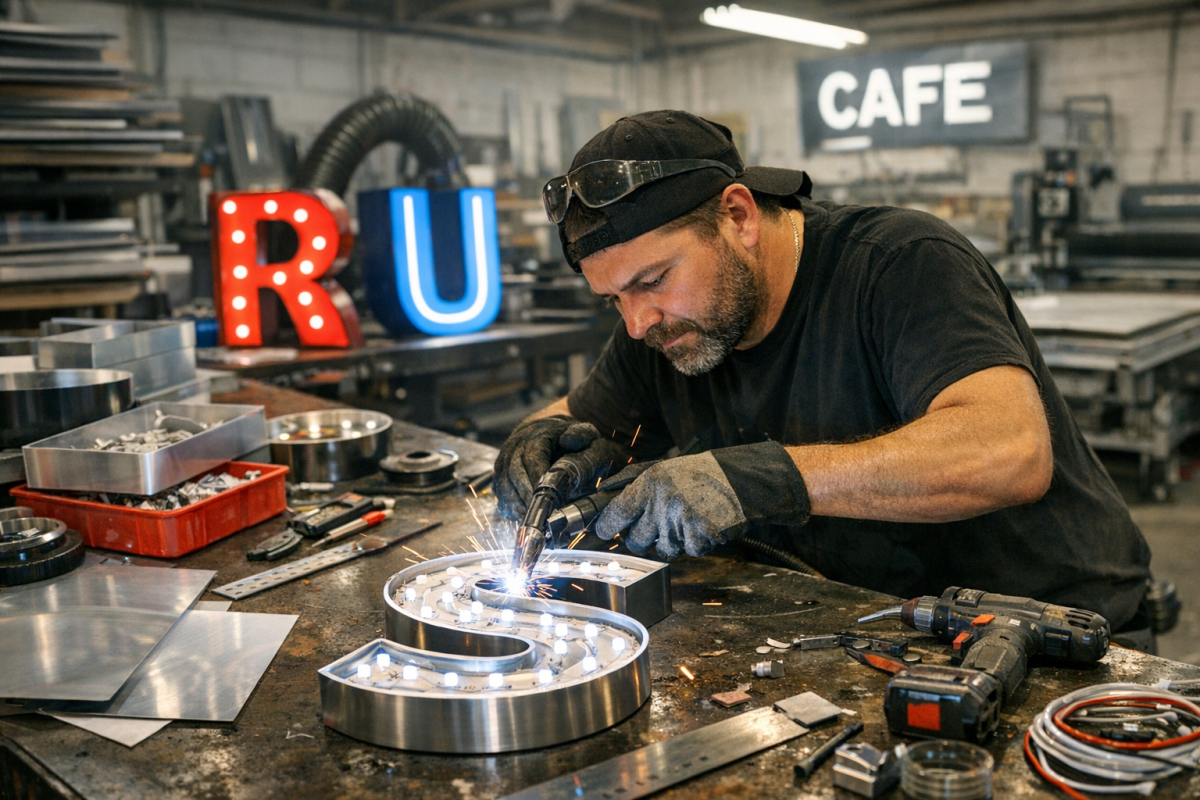
Most fabrication timelines fall between two and six weeks. Simpler signs like flat-cut metal lettering or basic printed panels sit on the shorter end. Illuminated signs, multi-part cabinet signs, or anything with custom materials will take longer. The size of the fabrication shop and how many jobs are in the queue can also affect the timeline.
| Sign Type | Typical Fabrication Time |
|---|---|
| Vinyl or printed panel | 1-2 weeks |
| Flat-cut metal or acrylic letters | 2-3 weeks |
| Illuminated channel letters | 3-5 weeks |
| Cabinet or monument sign | 4-6 weeks |
Fabrication is skilled trades work, not a production line. The people building your sign are cutting, welding, wiring, and finishing - by hand. That takes time to do well.
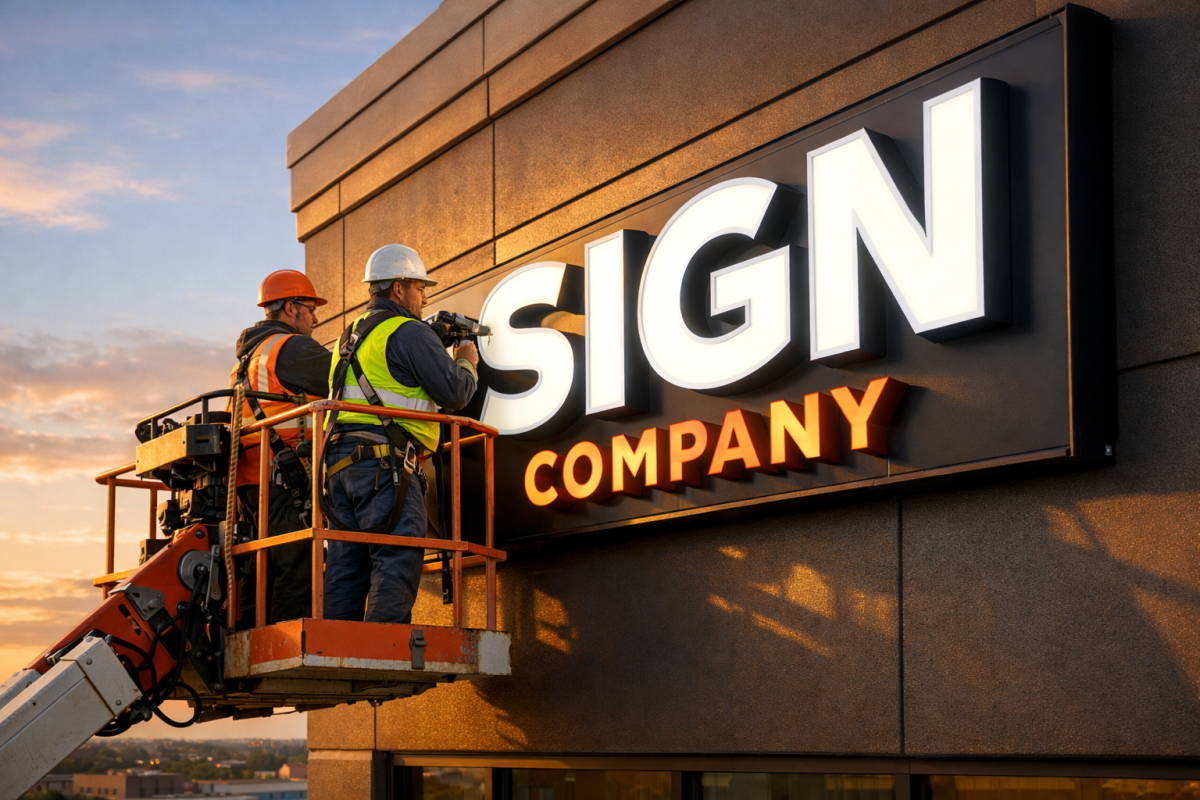
After fabrication, the sign moves to installation scheduling, which has its own set of logistics around crew availability, lift equipment, and site conditions.
Plan Ahead and Your Sign Will Shine on Time
Budgeting for labor is also worth doing early. With installation crews averaging $50-$150 per hour, learning about that number first helps you plan accurately and stay away from surprises at the finish line. A little preparation on the front end - locking in your design, your local permit requirements, and picking an experienced sign company - makes every step after it run smoother and faster. Keeping up with sign maintenance after installation also protects your investment long-term.
If you’re ready to get started or just want a clearer picture of what your project will cost, we’re here to help. Contact American Signs for a free estimate - call us at 866-598-7271 or send an email to info@americansignsinc.com. The sooner you connect with our team, the sooner your exterior sign can start working for your business.