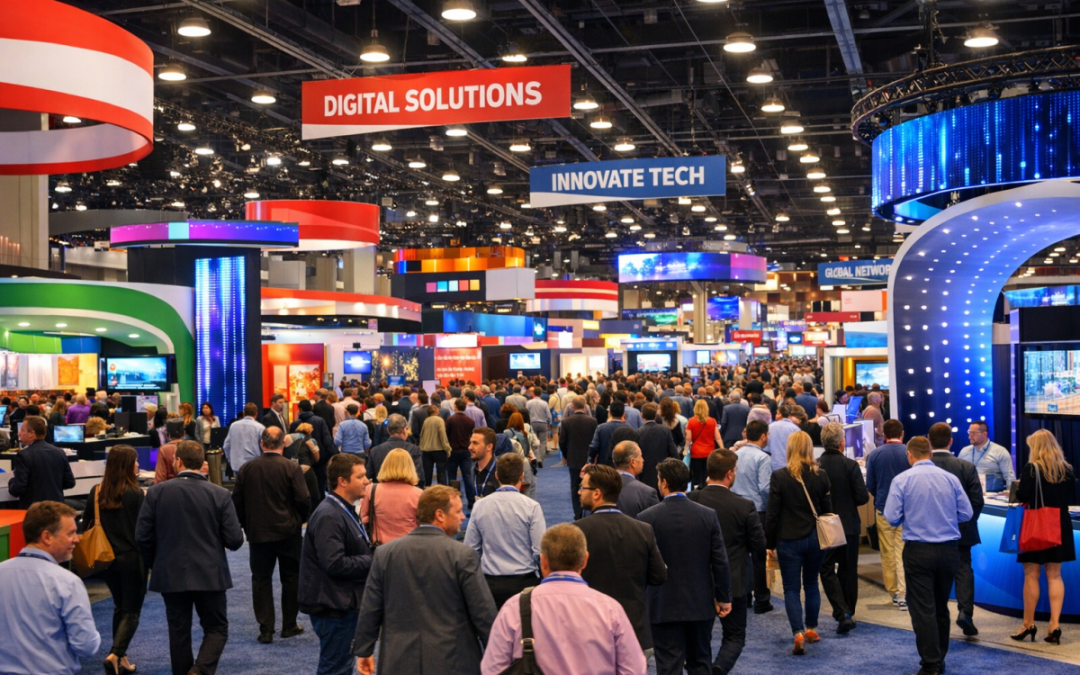
Competition is fierce in a way that is easy to underestimate until you are standing on the floor, surrounded by booth after booth stretching in every direction. Attendees move fast-they have agendas-and they make snap decisions. Studies show that nearly 80% of trade show attendees choose which booths to visit based on visual appearance alone - before a single word is spoken or a handshake exchanged - meaning your signage is doing the heavy lifting before your team even has a chance to engage.
That reality puts enormous pressure on exhibitors to show up with signage that’s sharp, on-brand, and built for the scale of a venue like the LACC. A banner that looks great in your office can disappear inside a convention hall that size. The materials, the printing quality, the dimensions, the layout - everything shapes whether your booth stops foot traffic or gets passed by.
That is where American Signs comes in. With deep experience making custom trade show and event signage for venues across Los Angeles, American Signs has become a trusted resource for exhibitors who need professional results without the guesswork. The sections ahead break down what makes convention center signage different - and how to get it right.
Key Takeaways
- Nearly 80% of trade show attendees choose which booths to visit based on visual appearance alone, before any interaction occurs.
- The LACC’s massive scale, shifting artificial lighting, and hundreds of competing booths make standing out especially challenging for exhibitors.
- Different sign types serve different purposes: backwalls anchor branding, overhead signs maximize visibility, and floor graphics guide foot traffic.
- Custom displays outperform generic ones; American Signs builds around specific booth dimensions, lighting conditions, and traffic flow needs.
- Standard production takes 8-16 weeks; exhibitors should begin planning 12-16 weeks out to avoid costly last-minute rushes.
What Makes the LACC Such a Tough Place to Stand Out
The Los Angeles Convention Center is massive. Five exhibit halls, 64 meeting rooms, and millions of attendees moving through the building every year - the scale is hard to grasp until you’re actually there.
When you’re creating your booth, that scale starts to work against you. You’re not competing with a handful of other exhibitors. On a busy show floor, you can be one of hundreds of booths lined up in every direction, all trying to pull attention from the same stream of foot traffic.
The visual environment inside a packed exhibit hall is relentless. Banners, backdrops, monitors, hanging signs, LED shows - every exhibitor is doing something to get seen. The result is a floor where everything competes with everything else and nothing rises above the noise. Your booth doesn’t get a quiet second to make its case.
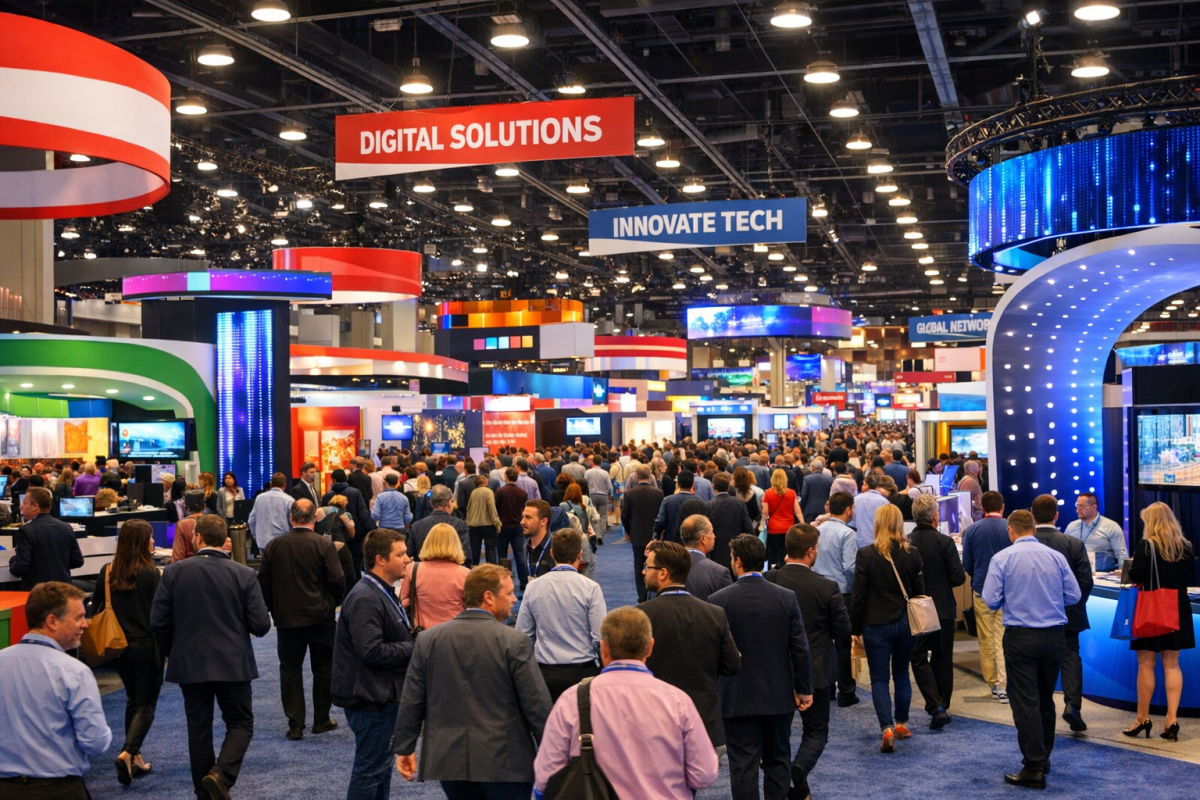
Attendees are also moving fast. Most walking the floor have a plan, and they’re scanning their surroundings in seconds to choose where to slow down. If your signage doesn’t communicate something helpful in that quick window, you’ve already lost that person to the next booth down the aisle.
The lighting inside the LACC can add another layer to this. Natural light is limited in the exhibit halls, and the artificial lighting changes from one section of the floor to the next. Colors that look sharp in a product photo can read very differently under convention center lighting. That can quietly undermine signage that looked perfect back at the office.
Booth size matters too. But not necessarily in the way you’d expect. Smaller booths aren’t automatically at a disadvantage. But they do have less physical space to work with and fewer opportunities to layer signage at different heights. Larger booths have more room and surface area to fill - and empty or inconsistent signage across a big space draws the wrong attention.
The challenge is to make sure attendees know who you are and what you do before they’ve even decided to stop walking. That difference between a look and a conversation is where most exhibitors lose ground at the LACC.
The Signage Types That Actually Work at Convention Booths
Not every sign type is built for a busy trade show floor. Some are great for drawing attention from across the hall, and others do their best work up close. Knowing which type to use - and where - makes a difference in how many people stop at your booth.
Backwall displays are the foundation of most trade show setups. They span the full width of your booth and give you a large, branded surface that’s visible from a distance. A well-designed backwall tells attendees who you are before they’ve taken a single step toward you.
Banner stands are more flexible. They’re lightweight, easy to move, and work well at the sides of a booth or along a walkway to pull foot traffic in. If you need a sign that travels well between events, banner stands are a helpful choice.
Hanging overhead signs are worth the extra setup effort at a large venue. They’re visible above the crowd and above neighboring booths, which is hard to achieve any other way. At a convention center with high ceilings, an overhead sign can mark your location from nearly anywhere on the floor.
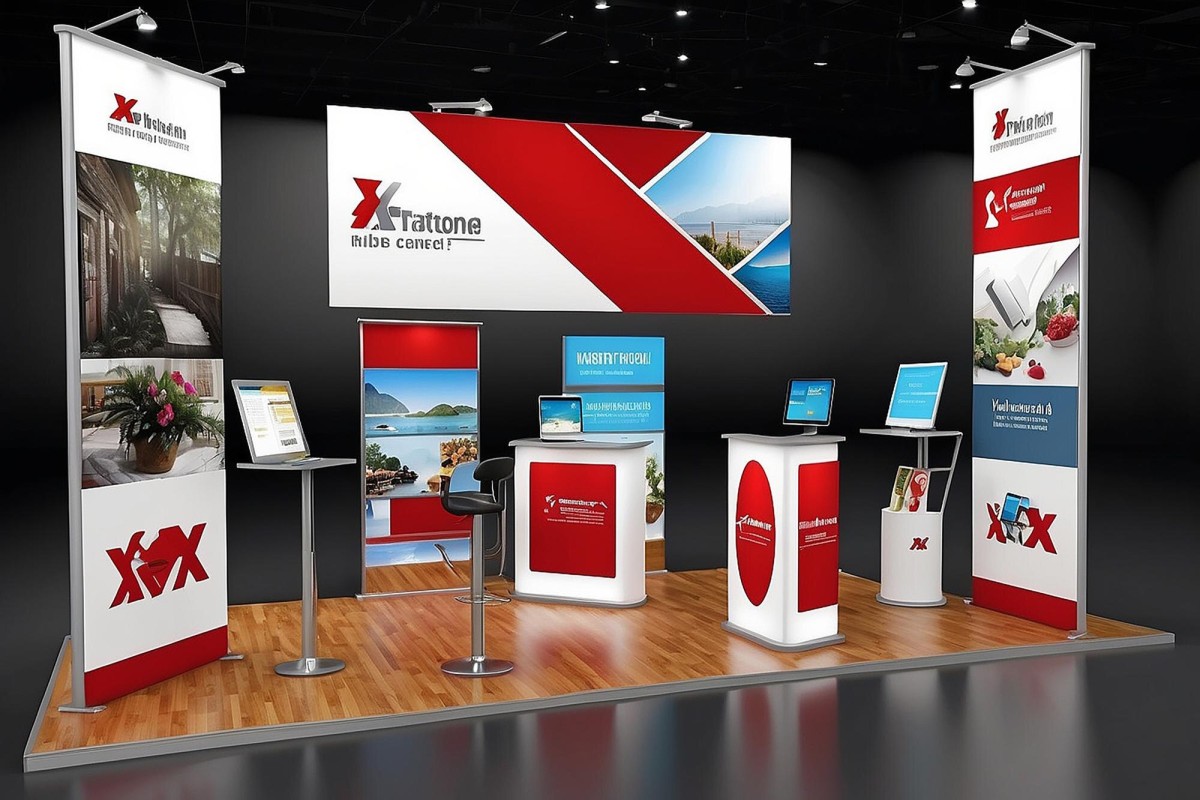
Table throws and table covers do something more subtle. They keep your booth looking finished and extend your branding all the way to the surface where you’re having conversations - a small detail that can add up to a more professional presentation.
Floor graphics are an underused option that can guide attendees right to your space. A branded path or logo on the floor gives you a visual invitation and can add presence without taking up any vertical space.
| Sign Type | Primary Use | Typical Size Range | Visibility Range |
|---|---|---|---|
| Backwall Display | Full booth backdrop and branding | 8 ft - 20 ft wide | Mid to long distance |
| Banner Stand | Side panels and walkway placement | 24 in - 60 in wide | Short to mid distance |
| Hanging Overhead Sign | Above-booth location marker | 4 ft - 10 ft wide | Long distance |
| Table Throw | Branded table coverage | 4 ft - 8 ft tables | Close range |
| Floor Graphic | Directional or decorative branding | 2 ft - 10 ft wide | Close to mid distance |
How American Signs Builds Custom Displays for LACC Events
Generic booth displays are built to fit any space, which means they’re built to fit no space well. A custom display is built around your brand, your booth footprint, and the show you’re exhibiting at. That difference shows up immediately when exhibitors set up side by side.
American Signs works with exhibitors from the first consultation all the way through to production. That early conversation matters quite a bit. The team pins down booth dimensions, traffic flow, lighting conditions, and what the display actually needs to do - drawing foot traffic from an aisle or anchoring a large island setup.
From there, the design phase takes those facts and turns them into something physical. Materials get selected based on what the venue allows, how the display needs to travel, and how many times it will be used. A display built for a single event looks different from one meant for ten shows a year across multiple cities.
Production timelines are worth planning around. Most custom booth builds take between 8 and 10 weeks from start to finish. That window gives the team time to fabricate, test, and make adjustments before anything ships to the venue.
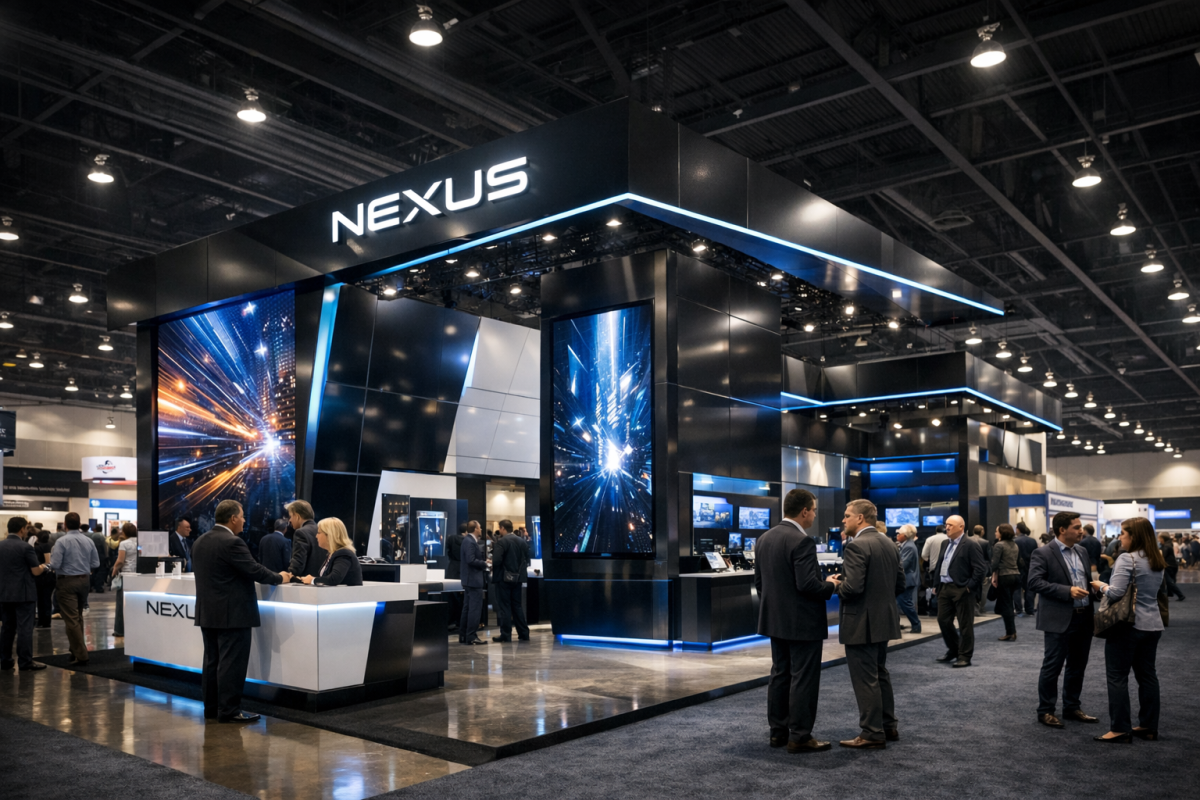
For exhibitors who land a show with less lead time, expedited production is available in 4 to 6 weeks - it’s a tighter process, so the earlier you reach out in that scenario the better.
| Production Path | Timeline | Best For |
|---|---|---|
| Standard Custom Build | 8-10 weeks | Planned shows with confirmed dates |
| Expedited Build | 4-6 weeks | Last-minute bookings or added events |
American Signs is based in Los Angeles, which makes coordination with LA-area venues easy. Local production means fewer shipping delays and easier communication if something needs to change close to an event date.
The team has worked across a number of industries and booth sizes, so the process is well-practiced without being rigid, and each project still gets treated as its own bespoke build instead of a variation on a template.
Planning Your Booth Signage Around LACC Show Schedules
Timing is everything when you’re making plans for a trade show at the Los Angeles Convention Center. A 10×10 booth rental can start around $7,400, so you’re already making a financial commitment before you’ve printed a single banner. Getting your signage in place - and getting it right - is how you make that investment count.
The standard production timeline for custom shows runs 8 to 16 weeks, and that’s not a window you want to discover late. If your show is in six months, now is the time to start conversations with your signage partner - not in month five.
There is a 4 to 6 week expedited path available. But that’s better treated as a backup than a plan. Rush production can mean tighter revision rounds and less time to catch mistakes. The more lead time you give yourself, the more control you have over the final result.
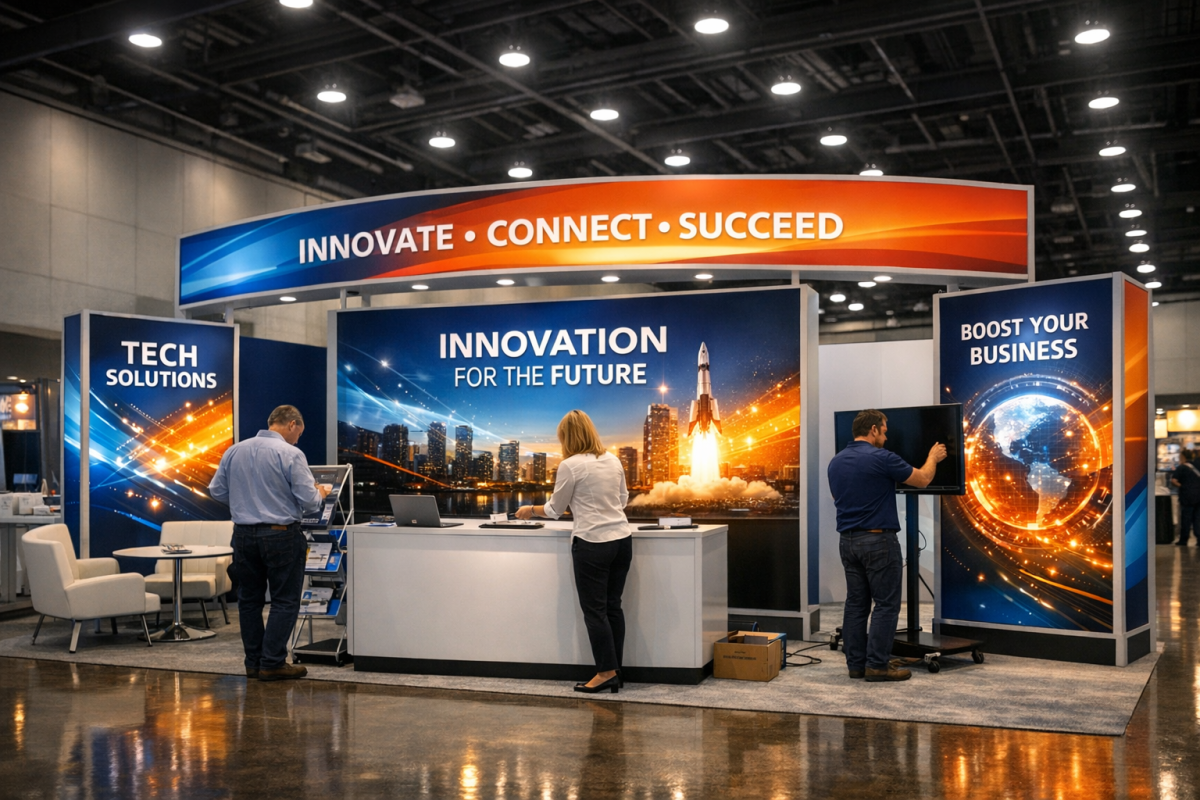
A set of milestones helps to keep everything on track. Work backwards from your show date to get a basic picture of where each job needs to fall.
| Timeframe Before Show | Milestone |
|---|---|
| 12-16 weeks out | Confirm booth size and layout with the LACC |
| 10-12 weeks out | Brief your signage partner and submit design concepts |
| 8-10 weeks out | Approve final designs and place your production order |
| 4-6 weeks out | Review proofs and request any final adjustments |
| 2-3 weeks out | Receive completed displays and inspect everything |
| 1 week out | Confirm delivery logistics to the LACC and show management |
One thing worth keeping in mind is that the LACC hosts events back to back throughout the year. Freight deadlines and move-in windows are strict, and missing them can leave you scrambling. Working with a team that handles sign fabrication and understands production schedules can help you avoid those last-minute surprises.
Exhibitors who walk in prepared are the ones who get to focus on their customers instead of their setup. A little planning at the front end goes a long way toward a smooth show day. That includes confirming any sign permit requirements well before your move-in date.
Ready to Own the Floor at Your Next LA Show?
Whether you are working with a compact inline booth or commanding a large island exhibit, the decisions you make around custom builds, display types and production timelines all add up. Starting that process early - and with the right partner - gives you the flexibility to create something that works instead of something thrown together at the last minute.
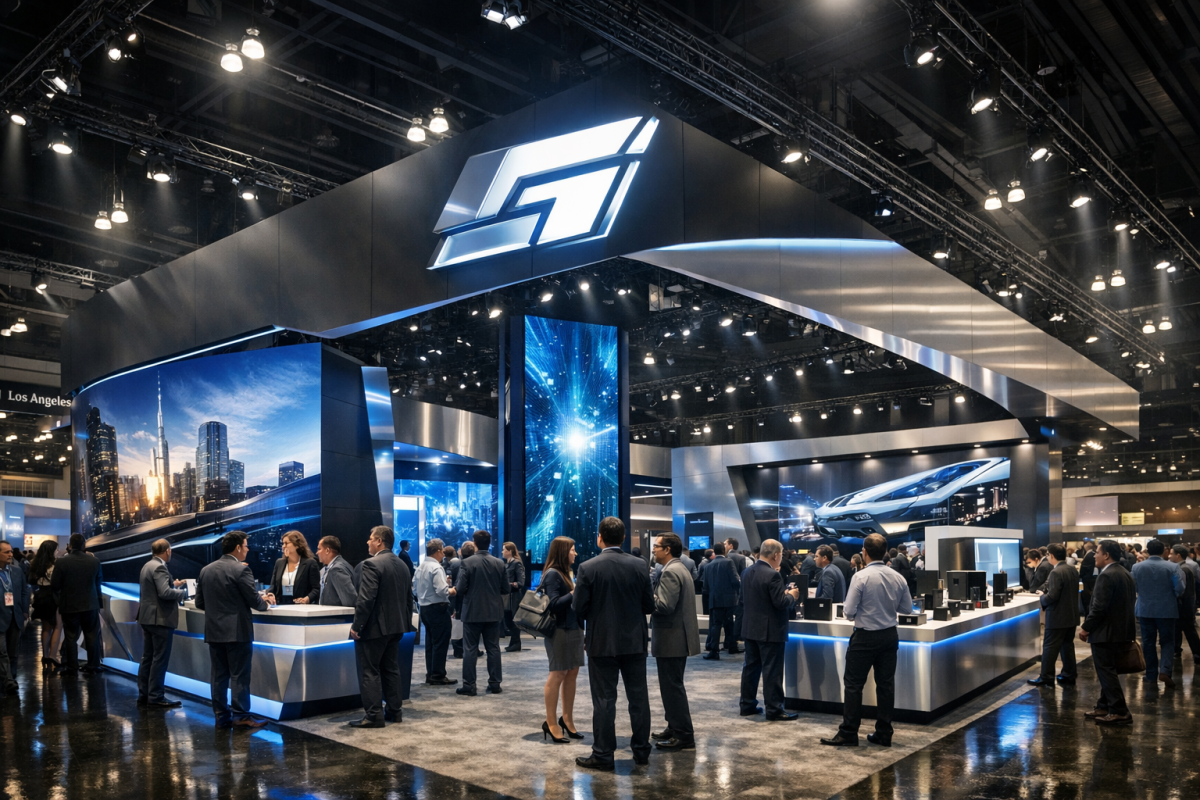
That is where American Signs comes in. Our team understands the demands of convention center environments and helps you design and produce trade show signage that makes your booth impossible to ignore. Reach out for a free estimate - call us at 866-598-7271 or email us at info@americansignsinc.com. Let’s build something worth stopping for.